The US B2B Compliance Landscape & SOC 2 Fundamentals
Understanding the US B2B Compliance Ecosystem
In the modern enterprise technology landscape, demonstrating a robust security posture is no longer just a marketing advantage it is a non-negotiable prerequisite for doing business in the United States. As B2B SaaS adoption accelerates and cyber threats become increasingly sophisticated, enterprise procurement teams are demanding rigorous third-party validation before signing vendor contracts. For scaling software companies, selecting the best SOC 2 compliance software has evolved from an optional administrative task into a core revenue-enabling strategy.
Historically, preparing for a System and Organization Controls (SOC) audit required months of manual document collection, spreadsheets, screenshots, and costly external consulting engagements. Today, the shift toward automated Governance, Risk, and Compliance (GRC) platforms has transformed this burden. By leveraging the best SOC 2 compliance software, modern cloud-native enterprises eliminate hundreds of manual engineering hours by continuously monitoring cloud infrastructure, automating policy management, and streamlining evidence gathering for CPA auditors.
What Is SOC 2 Compliance and Why Does It Matter for B2B Growth?
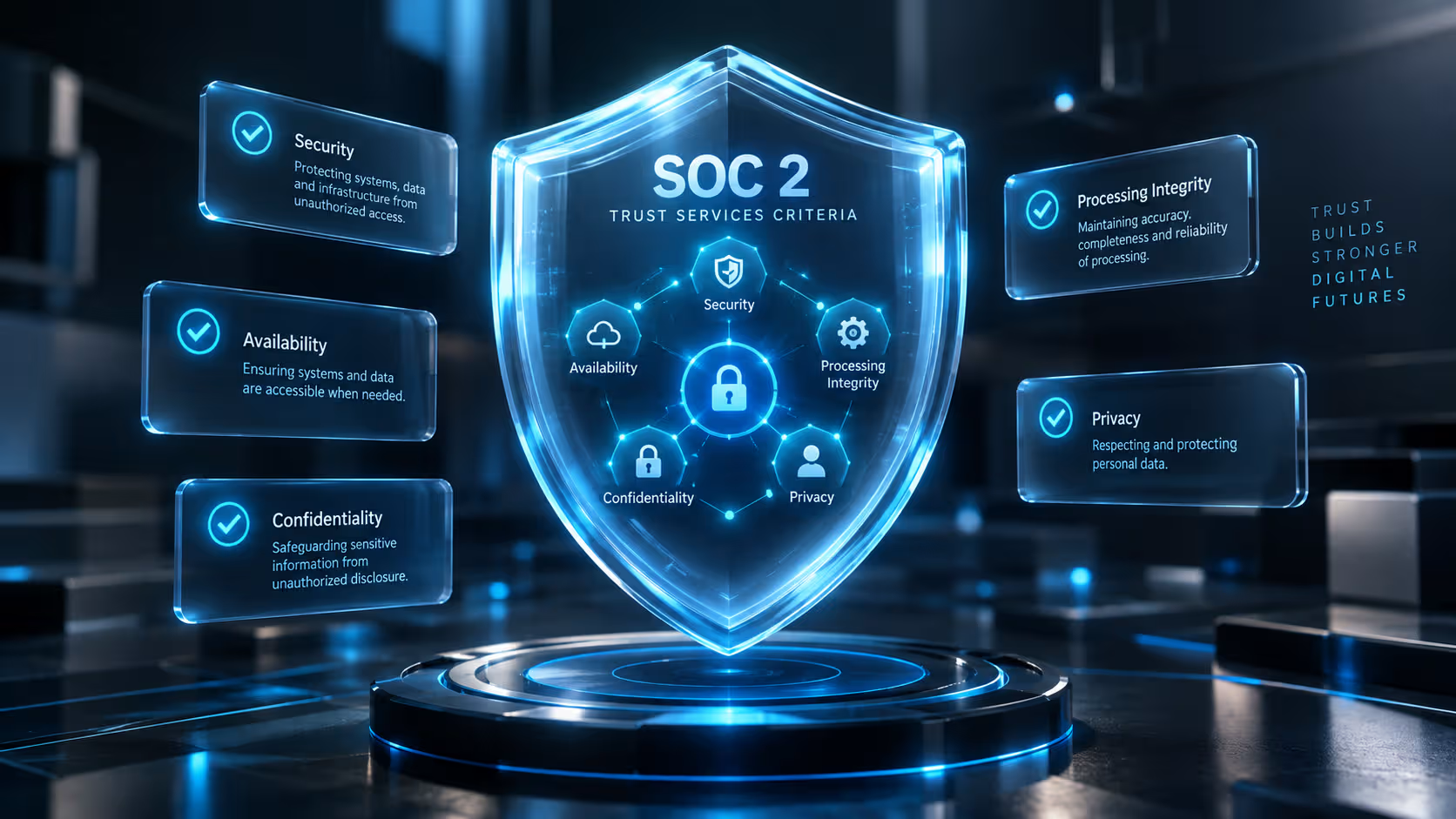
Created by the American Institute of CPAs (AICPA), SOC 2 is an auditing framework designed to verify how effectively a service organization manages customer data based on five Trust Services Criteria (TSC):
- Security: The foundational criterion required in every audit, ensuring systems are protected against unauthorized access, data exfiltration, and operational disruption.
- Availability: Verifying that products, platforms, and infrastructure meet agreed-upon operational uptime and disaster recovery SLAs.
- Processing Integrity: Ensuring that system processing is complete, valid, accurate, timely, and authorized to meet business operations.
- Confidentiality: Protecting sensitive corporate information, intellectual property, and proprietary data from unauthorized disclosure.
- Privacy: Safeguarding personally identifiable information (PII) in accordance with AICPA guidelines and US data protection regulations.
For US-based organizations, achieving SOC 2 attestation proves that internal controls are systematically designed and operationally effective. Enterprise buyers, particularly in sectors like finance, healthcare, and enterprise software, routinely refuse to evaluate vendors without a valid SOC 2 Type 1 or Type 2 report.
Even in outbound business development and client acquisition pipelines such as configuring secure infrastructure for a B2B cold email agency enterprise clients demand proof of stringent data security controls before integrating third-party tools into their communications ecosystem. Evaluated against stringent enterprise benchmarks, adopting the best SOC 2 compliance software ensures that early-stage and enterprise SaaS vendors maintain continuous compliance without interrupting product development velocities.
Ultimately, implementing the best SOC 2 compliance software creates an automated foundation for passing rigorous AICPA third-party audits with ease, building immediate buyer trust and shortening complex B2B sales cycles.
Essential SOC 2 Compliance Requirements & Audit Types
Key SOC 2 Compliance Requirements for B2B Organizations
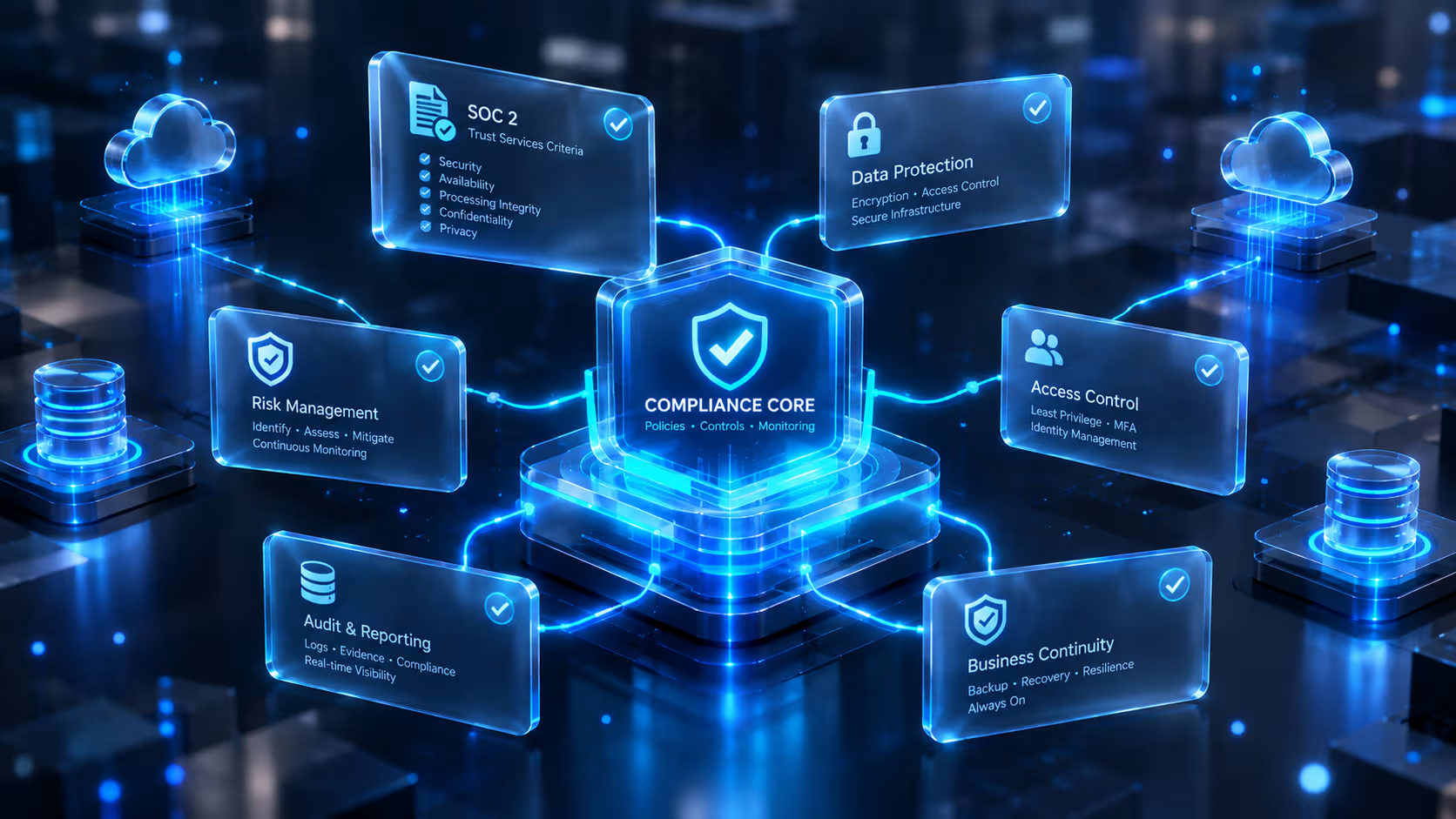
Fulfilling core soc 2 compliance requirements demands a comprehensive approach to technical, administrative, and physical safeguards across an organization’s entire cloud infrastructure. Rather than treating security as a static state, the AICPA framework evaluates how controls are established, enforced, and monitored daily. Meeting these complex soc 2 compliance requirements demands automated tracking, where the best SOC 2 compliance software monitors cloud configurations against security policies in real time.
To satisfy auditor inspection, technical teams must establish verifiable controls across several foundational operational pillars:
- Access Control & Identity Management: Enforcing Role-Based Access Control (RBAC), mandatory Multi-Factor Authentication (MFA) across all identity providers, and quarterly access reviews for production environments.
- Data Protection & Cryptography: Implementing robust encryption protocols, ensuring end-to-end encryption for data in transit (TLS 1.3) and data at rest (AES-256), alongside automated key management protocols.
- Vulnerability Management & Monitoring: Conducting continuous vulnerability scanning, annual third-party penetration testing, and centralized Web Application Firewall (WAF) logging.
- Incident Response & Disaster Recovery: Establishing documented incident management playbooks, automated backup verification, and tested business continuity procedures to ensure high availability.
Understanding SOC 2 Type 1 vs. Type 2 Audits
When preparing for an AICPA audit, B2B software companies must choose between two distinct report types depending on their current stage of growth and enterprise customer expectations:
- SOC 2 Type 1 (Point-in-Time Evaluation): Assesses whether a company’s security controls are properly designed at a single specific date. It serves as an ideal baseline for early-stage startups needing rapid compliance proof to unblock immediate sales deals.
- SOC 2 Type 2 (Continuous Operational Effectiveness): Evaluates both the design and operational effectiveness of internal controls over a historical testing window (typically 3, 6, or 12 months). While a Type 1 report satisfies early-stage requirements, growing enterprises utilize the best SOC 2 compliance software to maintain continuous evidence collection across the entire 3 to 12-month Type 2 observation window.
Comparative Analysis: SOC 2 Type 1 vs. SOC 2 Type 2
| Feature / Dimension | SOC 2 Type 1 Report | SOC 2 Type 2 Report |
| Audit Scope | Point-in-time design assessment (Single date) | Historical operational effectiveness (3 to 12 months) |
| Time to Complete | 2 to 4 weeks | 3 to 12 months (Observation period) |
| Audit Complexity | Low to Moderate | High (Requires continuous evidence) |
| Enterprise Buyer Acceptance | Accepted for preliminary vendor screening | Mandatory for mid-market and Fortune 500 deals |
| Automated Software Role | Rapid policy setup and cloud configuration checks | Continuous control monitoring and real-time evidence capture |
By organizing technical evidence into auditor-ready reports, relying on the best SOC 2 compliance software ensures B2B software vendors satisfy all core security criteria without stalling engineering roadmaps.
The Ultimate SOC 2 Compliance Checklist
The 2026 SOC 2 Compliance Checklist for Technical Readiness
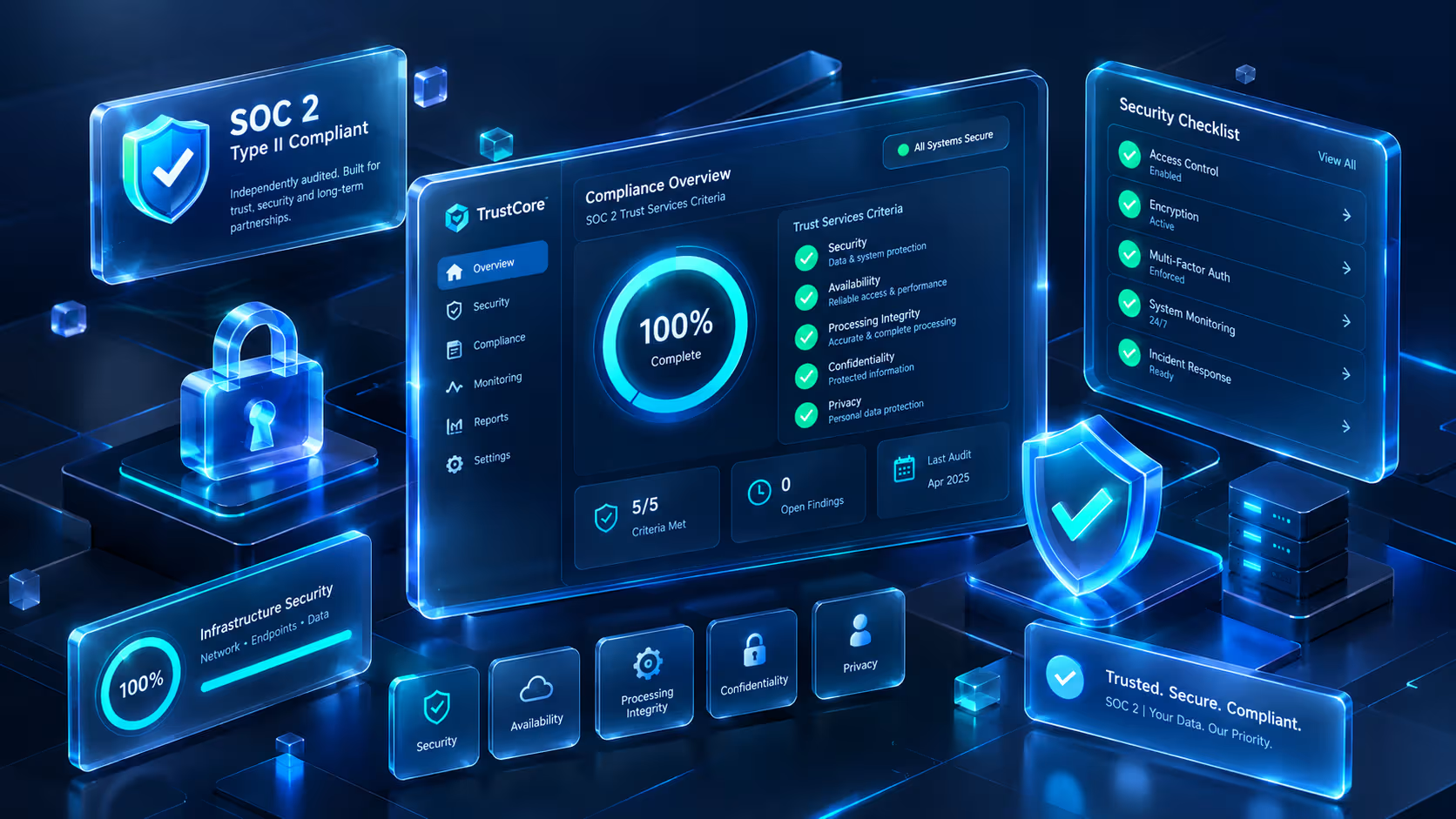
Navigating an AICPA audit without a clear execution roadmap often leads to expanded audit scopes, delayed deal cycles, and spiraling engineering costs. Understanding what is soc 2 compliance checklist requirements entail allows technical leaders to systematically remediate infrastructure vulnerabilities before engaging an external CPA auditor. Modern engineering teams rely on the best SOC 2 compliance software to turn static policy requirements into automated, continuous operational controls.
Step 1: Scope Definition & Trust Services Criteria Selection
Before writing policies or configuring cloud environments, organizations must clearly define their audit boundary:
- Identify In-Scope Systems: Map all databases, cloud environments (AWS, Azure, GCP), microservices, and third-party SaaS vendors handling customer data.
- Select Relevant TSCs: Security is mandatory for every SOC 2 audit. Add Availability, Confidentiality, Processing Integrity, or Privacy only if required by key enterprise customers or SLAs.
Step 2: Policy Documentation & Governance Setup
Auditors inspect both technical configurations and administrative governance:
- Standard Operating Policies: Draft and publish core security policies, including Information Security, Incident Response, Access Control, and Acceptable Use Policies.
- Employee Security Awareness: Ensure 100% of employees complete security awareness training upon onboarding and annually thereafter.
- Vendor Risk Management: Conduct formal risk assessments for all sub-processors and third-party software integrations.
Step 3: Infrastructure Hardening & Cloud Configuration
Engineering teams must align production infrastructure with AICPA security standards:
- Enforce Least Privilege & MFA: Mandate Multi-Factor Authentication across all identity providers (IdPs) and eliminate shared credentials.
- Automated Patching & Vulnerability Scanning: Deploy endpoint management agents and routine container vulnerability scanning to meet strict SLA remediation windows.
- Continuous Cloud Posture Management: Deploying the best SOC 2 compliance software ensures cloud storage buckets, security groups, and encryption keys remain compliant with zero configuration drift.
Step 4: Automated Evidence Collection & Auditor Selection
The final phase prepares the organization for the actual audit examination:
- Establish Continuous Evidence Streams: Replace manual screenshot collection with continuous API logging for change management, access requests, and backup verification.
- Engage an Accredited CPA Auditor: Select an independent AICPA-licensed auditing firm familiar with modern cloud infrastructure and automated compliance platforms.
Leveraging the best SOC 2 compliance software streamlines all four steps, reducing total audit preparation time from six months to just a few weeks.
Comprehensive Review Best SOC 2 Compliance Software Platforms
Deep Dive: Top 4 Best SOC 2 Compliance Software Solutions
Selecting the best SOC 2 compliance software requires evaluating key criteria such as continuous control monitoring capabilities, native cloud API integrations, automated evidence gathering speed, and auditor ecosystem flexibility. While manual audit prep can take upwards of 6 to 9 months, modern automated Governance, Risk, and Compliance (GRC) tools compress this timeline to just a few weeks. Below is an in-depth technical analysis of the top four platforms dominating the US enterprise market in 2026.
1. Vanta: Best for Automated Evidence Collection & Rapid Onboarding
Vanta pioneered the automated compliance market and remains widely recognized as a best SOC 2 compliance software industry standard for fast-growing B2B SaaS companies.
- Key Strengths: Vanta features over 300+ out-of-the-box integrations across cloud providers (AWS, GCP, Azure), identity management systems (Okta, Google Workspace), and developer workflows (GitHub, GitLab). Its continuous monitoring agents automatically flag security non-compliance issues such as unencrypted database snapshots or missing MFA on admin accounts before an auditor notices them.
- Audit Experience: Vanta pairs customers with a network of vetted independent CPA auditors through the Vanta Auditor Network, enabling seamless report delivery.
- Ideal For: Fast-growing startups and mid-market SaaS vendors seeking the best SOC 2 compliance software to achieve rapid audit readiness within 2 to 4 weeks.
2. Drata: Best for Enterprise Continuous Control Monitoring & Scalability
Drata is built for high-growth mid-market and enterprise organizations requiring advanced automation, custom control mapping, and continuous security posture visibility. It is consistently ranked among the best SOC 2 compliance software platforms for complex engineering environments.
- Key Strengths: Drata’s “Autonomous Control Monitoring” engine continuously tests technical controls against SOC 2, ISO 27001, HIPAA, and custom enterprise security frameworks simultaneously. It includes automated employee onboarding workflows, background check tracking, and real-time risk assessment modules.
- Audit Experience: Allows internal compliance teams and external CPA auditors to collaborate inside a dedicated, read-only auditor workspace.
- Ideal For: Scaling tech companies choosing the best SOC 2 compliance software to handle multi-framework audits across complex, multi-cloud architectures.
3. Secureframe: Best for End-to-End Guided Audit Support
Secureframe stands out by blending automated technology with dedicated in-house compliance guidance, making it a solid choice for the best SOC 2 compliance software for teams without a full-time CISO or compliance department.
- Key Strengths: Offers automated policy generation, personnel tracking, vendor risk management, and cloud infrastructure scanning. Secureframe provides dedicated compliance managers who assist technical teams through readiness assessments and policy customization.
- Audit Experience: Provides automated evidence packaging that allows CPA auditors to complete testing with minimal back-and-forth communication.
- Ideal For: Organizations selecting the best SOC 2 compliance software that want expert human guidance paired with continuous technical automation.
4. Sprinto: Best for Mid-Market Custom Control Mapping
Sprinto provides an agile, highly flexible, and cost-effective solution, positioning itself as a powerful alternative in the best SOC 2 compliance software market.
- Key Strengths: Sprinto replaces generic security controls with granular, entity-level controls tailored to specific business operations. It features automated remediation workflows that guide engineers step-by-step through fixing failing controls.
- Audit Experience: Streamlines evidence submission by grouping audit requests into automated, pre-verified evidence folders.
- Ideal For: Mid-market SaaS platforms implemented as the best SOC 2 compliance software for fast-moving engineering teams prioritizing flexibility and lower subscription costs.
Enterprise B2B Software Comparison Matrix
| Feature / Metric | Vanta | Drata | Secureframe | Sprinto |
| Primary Strength | Rapid Onboarding & Broad Integrations | Enterprise Continuous Monitoring | Expert-Guided Compliance Support | Custom Control Mapping & Agility |
| Native Integrations | 300+ Integrations | 250+ Integrations | 200+ Integrations | 150+ Integrations |
| Multi-Framework Sync | SOC 2, ISO 27001, HIPAA, GDPR | SOC 2, ISO 27001, NIST, FedRAMP | SOC 2, ISO 27001, PCI-DSS, HIPAA | SOC 2, ISO 27001, GDPR, HIPAA |
| Audit Speed | 2 – 4 Weeks | 2 – 4 Weeks | 3 – 5 Weeks | 2 – 4 Weeks |
| Target Company Size | Seed to Enterprise | Mid-Market to Enterprise | Early-Stage to Mid-Market | Early-Stage to Mid-Market |
Evaluating the best SOC 2 compliance software options across these metrics ensures technical leaders select a vendor that matches their engineering stack and business growth goals. Deploying the best SOC 2 compliance software transforms compliance into a continuous, frictionless background process.
Ultimately, choosing the best SOC 2 compliance software ensures continuous audit readiness while preserving engineering velocity and protecting revenue pipelines.
Real-World Cost Analysis: Software vs. Traditional Audits
Analyzing SOC 2 Compliance Cost Breakdown for 2026
Navigating the financial investment required for audit readiness is a critical consideration for growing B2B SaaS companies. Understanding the full soc 2 compliance cost spectrum requires looking beyond raw audit firm fees to account for internal engineering hours, policy authoring, third-party penetration testing, and continuous monitoring tooling. By replacing manual administrative overhead with modern automation, investing in the best SOC 2 compliance software significantly reduces the overall financial burden of achieving and maintaining compliance.
Direct vs. Indirect Compliance Expenses
When evaluating total expenditure, organizations typically categorize costs into direct auditing fees and indirect operational resources:
- CPA Auditor Fees: Licensed CPA firms typically charge between $10,000 and $30,000 for a SOC 2 Type 1 audit, while a comprehensive SOC 2 Type 2 audit ranges from $20,000 to $60,000+ depending on company size and scope.
- Penetration Testing & Tooling: Annual third-party penetration testing adds an additional $5,000 to $15,000 to the total soc 2 compliance cost.
- Internal Engineering Hours: Without automated tooling, technical teams spend roughly 200 to 400 hours manually taking screenshots, collecting evidence, and mapping controls costing tens of thousands of dollars in diverted engineering resources.
Implementing the best SOC 2 compliance software drastically cuts these indirect operational costs by automating continuous evidence collection, identity access mapping, and cloud configuration checks.
Cost Comparison: Manual Audit vs. Automated Compliance Software
| Expense Category | Manual Audit Approach | Automated GRC Platform Approach |
| CPA Audit Firm Fee | $20,000 – $60,000 | $15,000 – $35,000 (Partner network pricing) |
| Internal Engineering Effort | 300+ Hours ($45,000+ labor value) | < 30 Hours ($4,500 labor value) |
| Software Platform Cost | $0 (Spreadsheets/Manual) | $7,000 – $25,000 / year |
| Time to Audit Readiness | 6 to 9 Months | 2 to 6 Weeks |
| Total Estimated First-Year Cost | $65,000 – $100,000+ | $27,000 – $60,000 |
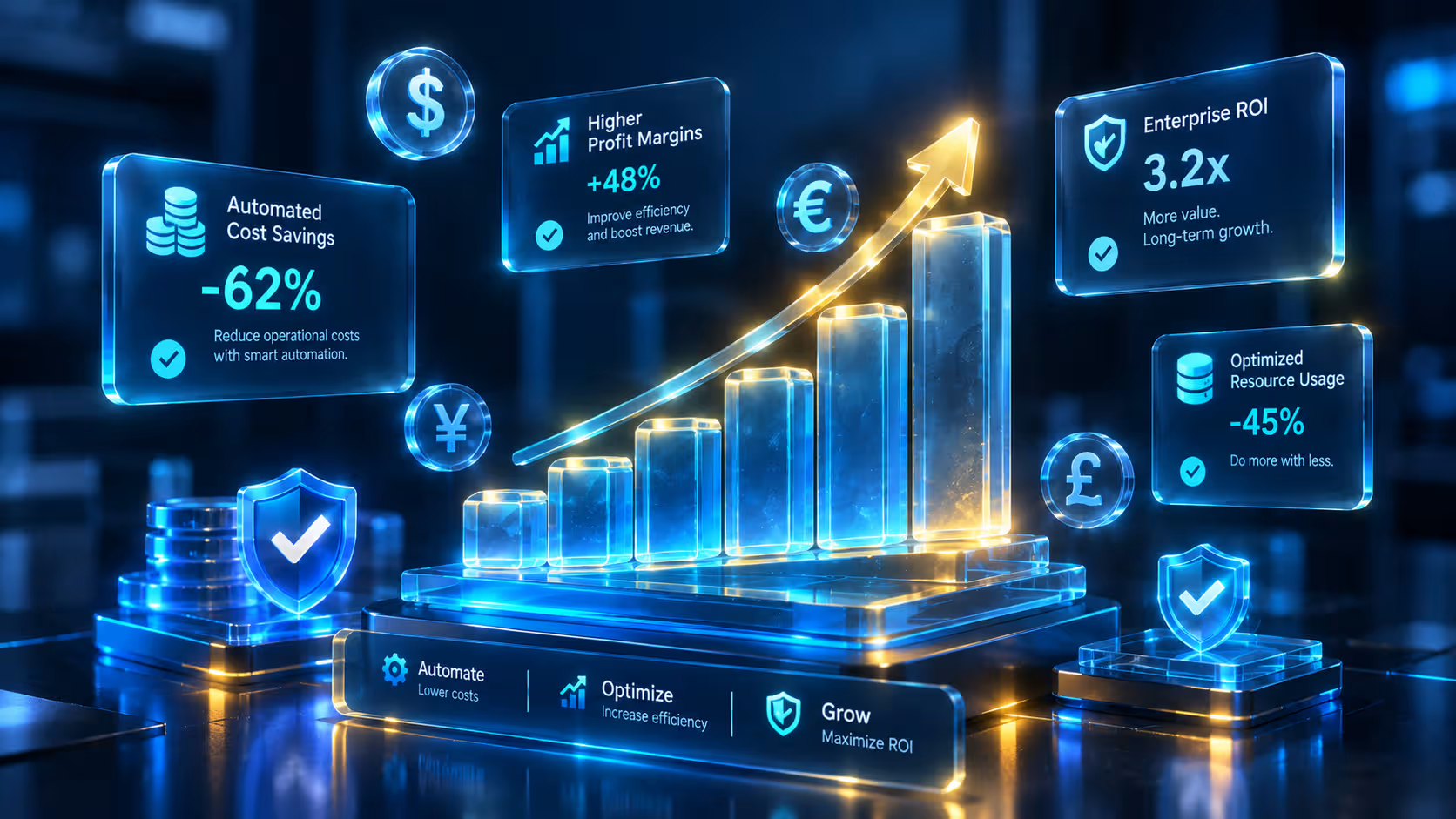
As demonstrated in the comparison, adopting the best SOC 2 compliance software yields a dramatic return on investment (ROI). Rather than absorbing massive productivity losses across engineering teams, software automation converts compliance into a predictable line item.
Ultimately, selecting the best SOC 2 compliance software transforms compliance from an expensive, manual bottleneck into an efficient, automated revenue driver that accelerates B2B deal velocity.
Cloud Implementation Strategy (AWS, Azure, GCP Integration)
Deploying Automated Compliance Platforms into Cloud Infrastructure
Achieving audit readiness requires seamlessly integrating the best SOC 2 compliance software directly into existing cloud infrastructure. Modern enterprise architectures span multi-cloud environments, managed Kubernetes clusters, and decoupled microservices. Rather than relying on manual configuration checks, automated GRC platforms leverage read-only API connectors to monitor cloud security posture continuously across Amazon Web Services (AWS), Microsoft Azure, and Google Cloud Platform (GCP).
1. Native API Connectors & Identity Provider Integration
Automated compliance platforms connect to cloud environments using IAM read-only roles and OAuth tokens:
- Identity & Access Management (IdP): Connecting Okta, Google Workspace, or Azure Active Directory allows automated tracking of Multi-Factor Authentication (MFA) enforcement, password rotation policies, and offboarding workflows.
- Version Control & CI/CD Pipelines: Integrating GitHub, GitLab, or Bitbucket ensures every code deployment follows documented change management procedures, requiring peer code reviews before production merges.
- Cloud Infrastructure Monitoring: By deploying API hooks into AWS CloudTrail, Azure Activity Logs, or GCP Audit Logs, modern DevOps teams using the best SOC 2 compliance software can automate evidence gathering for storage bucket access, network security group rules, and active database encryption settings.
2. Infrastructure as Code (IaC) Scanning & Continuous Remediation
Modern engineering organizations utilize Infrastructure as Code (IaC) frameworks like Terraform, AWS CloudFormation, or Pulumi to provision cloud resources. Automated GRC systems scan these templates before deployment to catch non-compliant configurations early:
- Automated Misconfiguration Alerts: Immediate notifications sent via Slack or Jira when a public S3 bucket is created or an unencrypted EBS volume is attached.
- Configuration Drift Prevention: Continuous scanning ensures that temporary manual overrides in staging or production environments do not compromise overall security.
- Auditor Evidence Automation: Generating cryptographic timestamps of cloud configuration states to serve as tamper-proof audit evidence.
Implementing the best SOC 2 compliance software ensures zero configuration drift across multi-cloud environments while keeping engineering teams focused on shipping features rather than gathering compliance screenshots.
Frequently Asked Questions (FAQs)
Frequently Asked Questions About SOC 2 Compliance Software
As technical leaders and founders prepare for their AICPA audits, several operational and regulatory questions arise regarding implementation timelines, auditing rules, and international framework mappings. Below are answers to the most common questions regarding automated GRC systems.
Q.1 How long does it take to achieve SOC 2 Type 2 compliance with automation software?
When leveraging the best SOC 2 compliance software, the timeline to achieve audit readiness is reduced from 6–9 months down to 2–4 weeks for initial policy and technical setup. However, a SOC 2 Type 2 audit requires a mandatory historical observation period (typically 3, 6, or 12 months) during which controls must operate effectively. The software continuously gathers evidence throughout this observation window without requiring manual engineering intervention.
Q.2 Can SOC 2 compliance software replace licensed CPA auditing firms?
No. AICPA guidelines strictly dictate that only independent, accredited CPA firms can issue an official SOC 2 Type 1 or Type 2 attestation report. While utilizing the best SOC 2 compliance software automates continuous evidence gathering, cloud posture monitoring, and policy management, the final report must be evaluated and signed by a third-party CPA auditor. Most modern automated GRC platforms provide read-only auditor portals to streamline this review process.
Q.3 Which Trust Services Criteria are mandatory for all US B2B SaaS platforms?
Security (also known as Common Criteria) is the only mandatory Trust Services Criteria required for every SOC 2 audit. The remaining four criteria Availability, Confidentiality, Processing Integrity, and Privacy are optional and should be included based on customer commitments, SLAs, and regulatory scopes (such as handling PII or high-availability financial transactions).
Q.4 How does SOC 2 compliance differ from ISO 27001 certification?
While both frameworks evaluate information security controls, their geographical focus and certification deliverables differ:
- SOC 2: Developed by the AICPA, it yields an attestation report detailing internal controls and is the primary benchmark for US and North American B2B SaaS enterprise deals.
- ISO 27001: An international standard that yields a formal certificate issued by an accredited certification body, widely required for European and global enterprise deals. Modern automated GRC tools allow organizations to map controls once and achieve dual compliance for both frameworks simultaneously.
Final Thoughts & Strategic Implementation
Accelerating Enterprise B2B Sales with Automated SOC 2 Compliance
For fast-growing B2B SaaS vendors and cloud-native enterprises, security compliance is no longer a reactive barrier to entry it is a proactive revenue driver. Securing a SOC 2 report demonstrates an uncompromising commitment to data security, instantly building trust with enterprise procurement teams and shortening deal cycles. Choosing the best SOC 2 compliance software enables organizations to replace tedious manual evidence gathering with continuous, API-driven automated monitoring.
As enterprise buyers tighten security review requirements in 2026, relying on outdated spreadsheets and point-in-time manual audits introduces significant operational risk. Implementing the best SOC 2 compliance software ensures that your security controls remain active, tested, and auditor-ready around the clock. This continuous posture protection prevents surprise non-compliance findings and safeguards your hard-earned customer trust.
Furthermore, the financial and operational ROI of automated GRC platforms is clear. By reducing engineering resource drainage by up to 90% and accelerating time-to-audit readiness from months to weeks, investing in the best SOC 2 compliance software pays for itself within a single enterprise deal cycle.
Whether your goal is to close immediate mid-market deals or scale toward Fortune 500 vendor status, selecting the best SOC 2 compliance software provides the foundation needed to convert security compliance from a cost center into a high-converting growth asset.