
1. Introduction to Modern CMS Architecture
The structural foundation of the world wide web has undergone a massive transformation over the past two decades. In the early days of digital publishing, launching an online presence meant writing raw static HTML files and manually applying CSS styling line by line. Today, over 70% of all online properties are built on dedicated web infrastructure, making the selection of the most popular cms for websites a critical business decision.
A Content Management System (CMS) bridges the technical gap by decoupling website backend infrastructure from front-end design, allowing non-technical creators to publish content effortlessly. However, modern CMS platforms in 2026 are far more than just visual publishing interfaces. They now handle complex API-driven data pipelines, multi-channel distribution, automated security protocols, and advanced search engine optimization out of the box.
Choosing the right platform is not merely about finding an easy drag-and-drop editor; it directly impacts your digital footprint. Selecting the most popular cms for websites that fits your operational needs guarantees that your infrastructure can scale during traffic spikes, protect sensitive user data, and deliver fast page load speeds. Whether you are launching a personal technology publication, a high-traffic e-commerce store, or an enterprise portal, your choice of platform dictates your site’s long-term technical debt and growth ceiling.
2. Core Evaluation Framework: How We Ranked These Platforms
To identify and evaluate the most popular cms for websites, we established an objective five-pillar assessment framework to benchmark every major content management engine available today:
- Ease of Use & Learning Curve: We analyze whether the platform is beginner-friendly for non-coders or requires developer expertise. A sustainable most popular cms for websites must balance intuitive visual content creation with advanced structural flexibility.
- Customization & Extension Ecosystem: The strength of a platform relies heavily on its modularity. We evaluate plugin libraries, API connectivity, theme frameworks, and custom code integrations.
- Performance, Speed & Built-in SEO: Search engine bots favor fast, structured websites. We benchmark how natively each CMS handles Core Web Vitals, Schema markup, sitemaps, and mobile responsiveness.
- Security, Maintenance & Data Ownership: We evaluate whether the platform forces vendor lock-in or grants full ownership of your data, alongside automated patching, backup mechanisms, and vulnerability mitigation.
- Total Cost of Ownership (TCO): Beyond initial setup, we calculate long-term operational costs including domain fees, hosting tiers, premium extensions, and developer retainer costs.
By examining these core metrics, web creators can cut through marketing hype and pick the most popular cms for websites that aligns perfectly with their long-term growth roadmap.
3. In-Depth Breakdown: The Most Popular CMS Options Analyzed
Selecting from the software market requires understanding how top platforms handle content delivery, security, and developer hooks. Below is an exhaustive breakdown of the leading solutions available today.
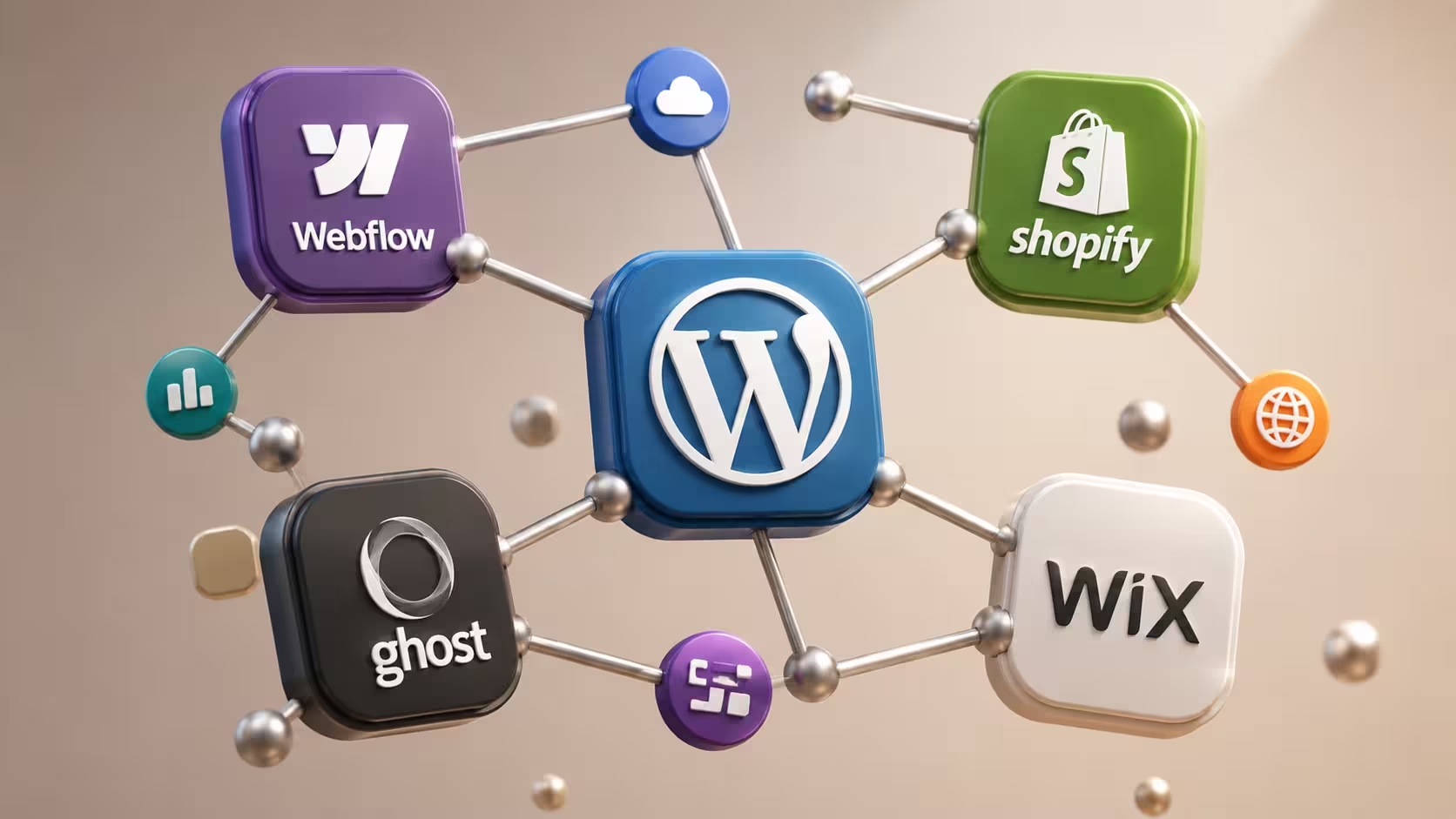
3.1 WordPress.org (Self-Hosted): The Unrivaled Market Leader
Powering over 43% of the modern web, WordPress.org is universally recognized as the most popular cms for websites across every digital vertical. As an open-source platform written in PHP and powered by a MySQL database, it provides absolute content ownership and infinite structural customization.
Unlike fully hosted proprietary builders, self-hosted WordPress allows users to deploy custom code, host on any server infrastructure, and access a massive library containing over 60,000 free plugins. From small independent blogs to massive news networks, it remains the most popular cms for websites because it adapts seamlessly to any technical requirement.
- Key Features: Full REST API, Gutenberg block editor, native SEO permalink customization, multi-user permission roles, and automated XML sitemap generation.
- Pros: Complete data ownership, massive global support community, unmatched plugin ecosystem, and deep search engine optimization capabilities.
- Cons: Demands regular core/plugin maintenance, requires separate hosting setup, and can suffer from performance bloat if unoptimized.
- Ideal Use Case: High-traffic publications, niche blogs, affiliate marketing networks, and scalable business portals.
3.2 Webflow: The Visual Design Powerhouse for Modern Agencies
Webflow has emerged as a disruptive visual development engine, earning its position as a top tier most popular cms for websites among design agencies and tech startups. Instead of relying on rigid templates or abstract coding environments, Webflow translates visual canvas manipulations directly into clean, semantic HTML5, CSS3, and JavaScript code.
By combining visual design control with an intuitive dynamic database backend, it allows teams to build complex responsive layouts without writing front-end code manually. As a modern hosted alternative, Webflow continues to grow as the most popular cms for websites that require bespoke visual branding and highly customized user experiences.
- Key Features: Visual CSS grid/flexbox controls, custom client content editor, built-in global CDN hosting, advanced interaction designer, and native CMS collection items.
- Pros: Produces clean code output, zero plugin management overhead, fast AWS-backed hosting performance, and granular responsive design control.
- Cons: Steeper learning curve for non-designers, strict CMS item limits on standard plans, and higher monthly pricing compared to basic shared hosting.
- Ideal Use Case: Design agencies, SaaS marketing pages, modern tech startups, and custom visual portfolios.
3.3 Ghost CMS: The Streamlined Solution for Independent Publishers
Ghost CMS was engineered with a hyper-focused mission: to strip away enterprise complexity and build the ultimate publishing environment for writers, journalists, and media creators. Written in modern JavaScript (Node.js), Ghost offers an ultra-fast alternative to bloated legacy platforms, establishing itself as a specialized most popular cms for websites dedicated to pure content distribution and newsletter monetization.
Unlike traditional platforms that require third-party plugins for memberships, Ghost includes native reader subscriptions, paywalls, and email newsletter delivery out of the box. Its lightweight architectural footprint makes it a preferred most popular cms for websites where publishing speed and minimalist user interfaces are paramount.
- Key Features: Native email newsletter integration, built-in subscription management, Markdown editor, native SEO meta tags, and structured JSON-LD schema output.
- Pros: Blazing fast load times, distraction-free publishing workflow, zero subscription plugin costs, and clean modern architecture.
- Cons: Highly restricted for non-publishing use cases (not suitable for standard e-commerce or directory sites), smaller theme ecosystem.
- Ideal Use Case: Substack alternatives, tech newsletters, media outlets, and independent journalists.
3.4 Shopify: The Global Leader in E-Commerce Content Management
When it comes to online commerce, Shopify stands out as the dedicated most popular cms for websites that focus primarily on selling products at scale. Operating as a fully managed SaaS platform, Shopify eliminates the server maintenance, PCI compliance headaches, and payment gateway technicalities that traditionally plagued online retailers.
While traditional platforms treat e-commerce as an add-on plugin, Shopify treats product catalogs, checkout conversion, and inventory logistics as core architectural primitives. For product-driven brands, it is undeniably the most popular cms for websites seeking a scalable, secure online store with minimal technical overhead.
- Key Features: Built-in multi-currency checkout, integrated POS system, automated inventory tracking, abandoned cart recovery, and massive app marketplace.
- Pros: Highly secure infrastructure, seamless payment gateway processing, reliable uptime during major sales events, and extensive merchant support.
- Cons: Transaction fees apply when using external payment processors, rigid checkout customization on non-Enterprise plans, liquid template lock-in.
- Ideal Use Case: Direct-to-Consumer (D2C) brands, international e-commerce stores, and multi-channel retail businesses.
3.5 Wix Studio & Wix: The All-in-One No-Code Builder
Wix has evolved far beyond its humble origins as a basic website builder into a sophisticated, all-in-one content platform. With the introduction of Wix Studio, it now serves both beginners and professional web agencies, solidifying its reputation as a flexible most popular cms for websites in the no-code ecosystem.
Providing cloud-based hosting, drag-and-drop design elements, dynamic database collections, and integrated SEO execution tools, Wix allows non-technical users to build functional web applications rapidly. It stands out as a practical most popular cms for websites where rapid deployment speed and all-inclusive managed services are the primary goals.
- Key Features: Unstructured drag-and-drop editor, dynamic database collections, integrated scheduling/booking systems, built-in AI website creator, and automated mobile view optimization.
- Pros: Extremely gentle learning curve, zero maintenance responsibilities, hosting and domain security bundled, extensive pre-built template library.
- Cons: Harder to export raw site code if migrating platforms, dynamic layout positioning can occasionally cause mobile alignment issues if unchecked.
- Ideal Use Case: Local service businesses, freelancer portfolios, event sites, and small commercial web projects.
3.6 Squarespace: The Aesthetic Choice for Creatives
Squarespace has long established itself as a refined visual platform, earning its spot as a leading most popular cms for websites focused on aesthetics, portfolio showcase, and brand storytelling. Built with a structured fluid engine editor, Squarespace ensures that every layout maintains high design integrity across desktop and mobile viewports automatically.
By bundling web hosting, domain registration, ecommerce tools, and email marketing into a single subscription, it functions as a hassle-free most popular cms for websites where users want premium visual presentation without managing code, security patches, or server configs.
- Key Features: Fluid Engine visual editor, integrated blogging suite, built-in scheduling tools, curated professional template library, and native social media integrations.
- Pros: Exceptionally clean design templates, zero technical maintenance, high-quality mobile responsiveness, and intuitive interface.
- Cons: Limited third-party plugin extensions, less flexible for deep technical SEO customizations, fixed subscription tier costs.
- Ideal Use Case: Photographers, creative agencies, restaurants, portfolios, and boutique service providers.
3.7 Drupal: Enterprise-Grade Architecture
For organizations requiring ironclad security and complex data management, Drupal remains the premier most popular cms for websites in the enterprise and institutional sector. Written in PHP, this open-source platform is designed to handle intricate taxonomies, advanced multi-role access controls, and heavy database queries effortlessly.
Unlike lightweight builders, Drupal demands technical development knowledge to set up, but it repays developers with unrivaled structural flexibility. It is widely recognized as the most popular cms for websites operating in government, higher education, and large global enterprise environments.
- Key Features: Advanced node and taxonomy systems, granular user role permissions, built-in multilingual capabilities, dynamic content views, and enterprise API hooks.
- Pros: Top-tier security architecture, powerful structural data handling, endless customizability, and excellent scalability for massive networks.
- Cons: Steep learning curve, requires professional PHP development expertise, higher overall implementation and maintenance costs.
- Ideal Use Case: Government web portals, university networks, healthcare systems, and massive enterprise intranets.
3.8 Joomla: The Flexible Middle Ground
Joomla occupies the middle tier between the user-friendliness of WordPress and the enterprise depth of Drupal, making it a versatile most popular cms for websites that require complex content hierarchies. Featuring built-in multilingual support and advanced user permission settings out of the box, Joomla handles multi-category portals smoothly.
While its extension ecosystem is smaller than WordPress, its native capabilities allow users to build structured community platforms, e-learning portals, and membership sites efficiently, keeping it a solid most popular cms for websites for technical site administrators.
- Key Features: Native multilingual manager, core access control list (ACL), flexible template overrides, and built-in menu assignment tools.
- Pros: Strong native functionality without relying heavily on plugins, robust user access controls, and flexible content presentation.
- Cons: Moderately difficult learning curve, smaller theme/extension library, fewer community developer resources compared to top competitors.
- Ideal Use Case: Community portals, non-profit organization sites, educational networks, and complex multi-user portals.
3.9 Strapi & Sanity: Headless CMS Solutions
The emergence of modern JavaScript frameworks like Next.js, React, and Vue has driven the rise of headless content engines like Strapi and Sanity as the most popular cms for websites utilizing decoupled architecture. A headless CMS separates the backend content storage from the front-end display layer, delivering content via lightweight GraphQL or REST APIs.
By decoupling the display layer, developers can deliver web content across browsers, mobile apps, smart displays, and IoT devices simultaneously. Headless setups are rapidly becoming the most popular cms for websites where ultra-fast performance, API flexibility, and custom front-end architecture are required.
- Key Features: Customizable content type builders, omnichannel API distribution, webhooks integration, role-based access control, and framework-agnostic architecture.
- Pros: Unmatched page performance speeds, total front-end design freedom, enhanced security against server attacks, and easy cross-platform publishing.
- Cons: Requires full stack web development expertise, no visual drag-and-drop page builder out of the box, higher development setup cost.
- Ideal Use Case: Modern web apps, multi-platform publishing networks, Jamstack sites, and enterprise digital products.
4. Strategic Feature Comparison Matrix
| CMS Platform | Primary Focus | Ease of Use | Customization | Hosting Model | Target Audience |
| WordPress | Universal Content | Moderate | Unmatched | Self-Hosted / Managed | Bloggers, Businesses, Publishers |
| Webflow | Visual Design | Advanced | High | Fully Managed Cloud | Agencies, Designers, SaaS |
| Ghost | Publishing & Newsletters | High | Moderate | Self-Hosted / Managed | Journalists, Media Creators |
| Shopify | E-Commerce Retail | High | High (Retail) | Fully Hosted SaaS | Direct-To-Consumer Merchants |
| Wix | All-in-One No-Code | Very High | Moderate | Fully Hosted Cloud | Small Businesses, Beginners |
| Squarespace | Visual Portfolios | Very High | Moderate | Fully Hosted SaaS | Creatives, Photographers |
| Drupal | Enterprise Security | Low (Devs) | Extremely High | Self-Hosted / Cloud | Government, Universities |
| Joomla | Complex Portals | Moderate | High | Self-Hosted | Community Sites, Non-Profits |
| Strapi/Sanity | Headless API Delivery | Low (Devs) | Unlimited | Self-Hosted / Cloud | App Developers, Tech Teams |
5. Traditional Monolithic CMS vs. Modern Headless CMS
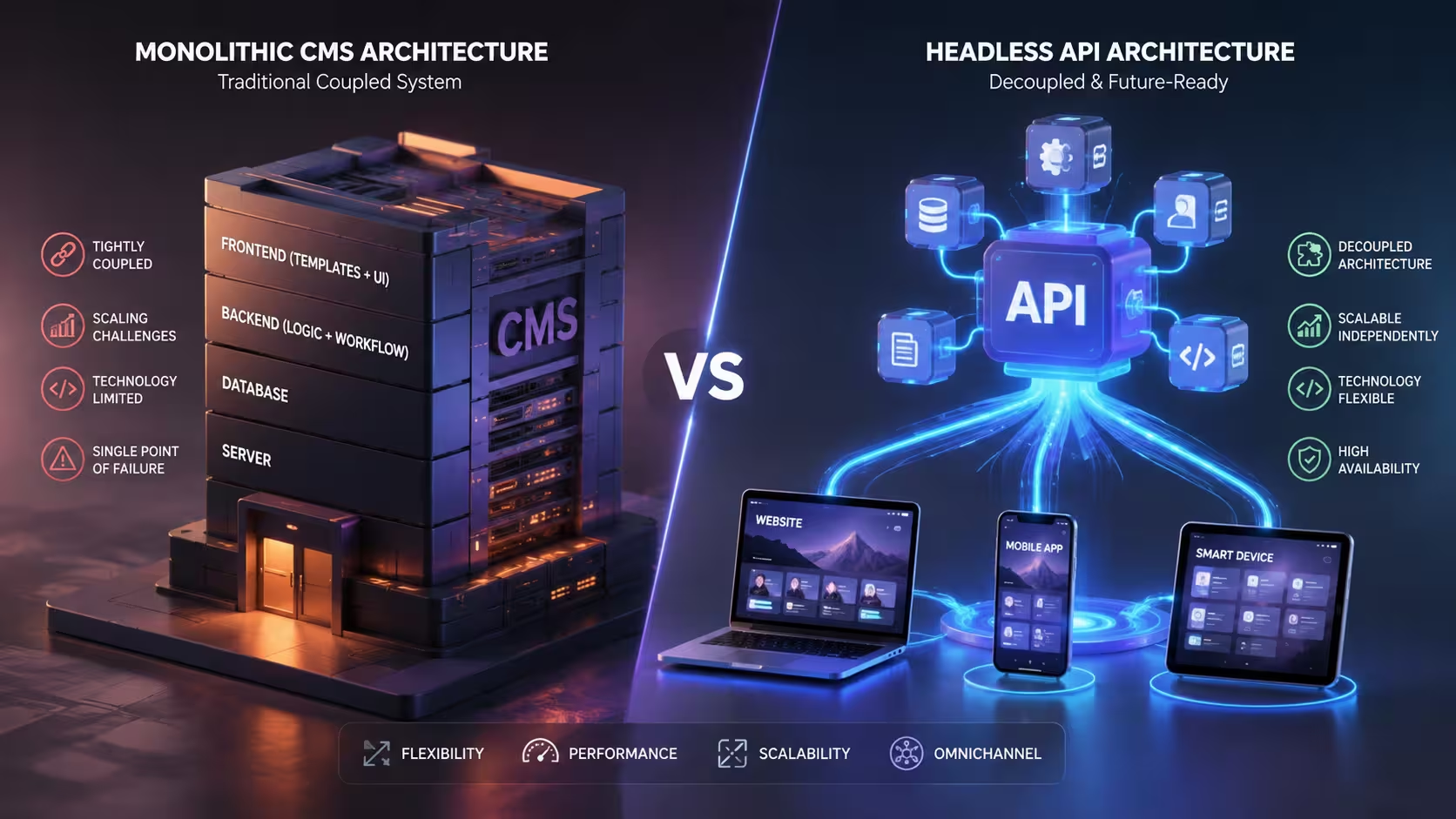
When selecting the most popular cms for websites, understanding the underlying system architecture is crucial for long-term technical planning. Traditionally, content systems operated under a monolithic architecture, where the content management database (backend) and the visual display layer (frontend) were tightly coupled together within a single software environment.
Monolithic engines remain the most popular cms for websites among non-technical creators because they provide integrated theme systems and visual previewing tools out of the box. However, modern enterprise needs have driven the shift toward headless (decoupled) setups. In a headless setup, content is stored independently and served as raw data through APIs to custom frontend frameworks like Next.js, Nuxt, or mobile applications.
- Monolithic Advantages: All-in-one management, built-in visual layout builders, simpler deployment, and lower initial development costs.
- Headless Advantages: Superior page load speed, bulletproof backend security, total design flexibility, and multi-platform content delivery across web, iOS, Android, and smart devices.
6. SEO & Technical Performance Audit Across Top CMS Platforms
Search engines evaluate web properties based on technical performance, structured data implementation, and Core Web Vitals score metrics. Choosing a most popular cms for websites that produces clean code output directly affects your search rankings and user retention rates.
To ensure long-term organic visibility, your chosen platform must handle key technical SEO capabilities seamlessly:
- Clean Code & Asset Minification: Platforms like Webflow and Ghost generate lightweight HTML/CSS output out of the box, whereas plugin-heavy installations on traditional systems often suffer from render-blocking JavaScript and CSS bloat.
- Schema Markup & Metadata Control: Search crawlers require clear structured data to understand content context. WordPress (via plugins like Rank Math) and Ghost offer granular control over OpenGraph tags, canonical URLs, and schema types.
- Automated Sitemap & Indexing Architecture: A reliable most popular cms for websites must automatically update XML sitemaps and properly manage robots.txt directives as new pages and categories are created.
- Core Web Vitals Optimization: Google prioritizes Largest Contentful Paint (LCP), Interaction to Next Paint (INP), and Cumulative Layout Shift (CLS). Hosted solutions like Shopify and Webflow optimize server infrastructure globally, while self-hosted platforms require server-side caching mechanisms like LiteSpeed or CDN edge integration.
Selecting an engine that simplifies these technical requirements ensures your content team can focus on creation while maintaining a search engine compliant web presence.
7. Step-by-Step Decision Roadmap: Choosing the Best CMS for Your Project

Selecting the ideal platform depends heavily on your project’s technical scope, budget, and business objectives. Use this practical decision matrix to match your specific requirements with the most popular cms for websites:
Scenario A: Content Publishing & Niche Affiliate Sites
- Top Recommendation: Self-hosted WordPress.org
- Why: Unmatched SEO flexibility, vast plugin library, and total ownership over your data make it the most popular cms for websites focused on long-term organic publishing and monetization.
Scenario B: Visual Agencies & High-End Design Portfolios
- Top Recommendation: Webflow or Squarespace
- Why: Webflow offers precise visual CSS layout controls without manual coding, while Squarespace provides elegant pre-built designs requiring zero maintenance.
Scenario C: Dedicated E-Commerce Stores
- Top Recommendation: Shopify
- Why: Purpose-built for digital retail with secure hosting, global payment processing, and scalable inventory management natively integrated.
Scenario D: Media Publications & Paid Newsletters
- Top Recommendation: Ghost CMS
- Why: Delivers lightning-fast publishing speeds with built-in subscription paywalls and native email newsletter dispatch out of the box.
8. Migration & Future-Proofing Strategy
Migrating between platforms can be a complex technical challenge if not planned carefully. Choosing a established most popular cms for websites reduces platform risk, but having a clear data portability strategy is essential.
When preparing to migrate your digital content, execute this migration checklist:
- Audit & Map Existing Content Structure: Export all posts, pages, dynamic database items, and media attachments into structured JSON or CSV formats.
- Preserve URL Hierarchies: Map existing permalink structures exactly or establish 301 redirects to protect hard-earned search rankings and backlink authority.
- Database Schema Alignment: Ensure custom post types, categories, tags, and taxonomies translate accurately into your new backend setup.
- Staging Environment Testing: Always build, test, and perform technical audit checks on a non-indexed staging domain before pointing live DNS records.
Frequently Asked Questions (FAQs)
Q. What is the most popular cms for websites in the world?
WordPress.org is the undisputed market leader, powering over 43% of all active websites worldwide due to its open-source nature, vast community support, and total customization capabilities.
Q. Is a hosted website builder better than a self-hosted CMS?
Hosted builders (like Shopify, Wix, or Squarespace) handle security, hosting, and updates automatically, making them ideal for beginners. Self-hosted platforms (like WordPress or Drupal) offer complete data ownership, unlimited code access, and lower long-term operational costs.
Q. Which CMS is best for search engine optimization (SEO)?
While search engines rank content quality over software engines, WordPress, Ghost, and Webflow lead the industry with clean code output, custom schema support, and granular metadata controls out of the box.
Q. Can I change my CMS later without losing my Google rankings?
Yes, you can change your CMS without losing your search rankings provided you maintain your existing URL structures or implement proper 301 redirect mappings for all published pages to preserve search engine indexing history and backlink authority.
Final Verdict & Strategic Recommendations
Selecting the most popular cms for websites is not about finding a single “perfect” platform, but identifying the software engine that aligns seamlessly with your operational workflow, design requirements, and scalability goals.
For absolute freedom, long-term data ownership, and endless extensibility, WordPress.org remains the definitive choice for most web creators. If your priority is rapid visual design without managing plugins, Webflow provides a modern, high-performance alternative. For e-commerce ventures, Shopify stands un-matched, while Ghost offers a streamlined haven for independent writers and publishers.
Evaluate your technical capabilities, project scope, and budget framework today to deploy a platform built for sustainable growth in 2026 and beyond.