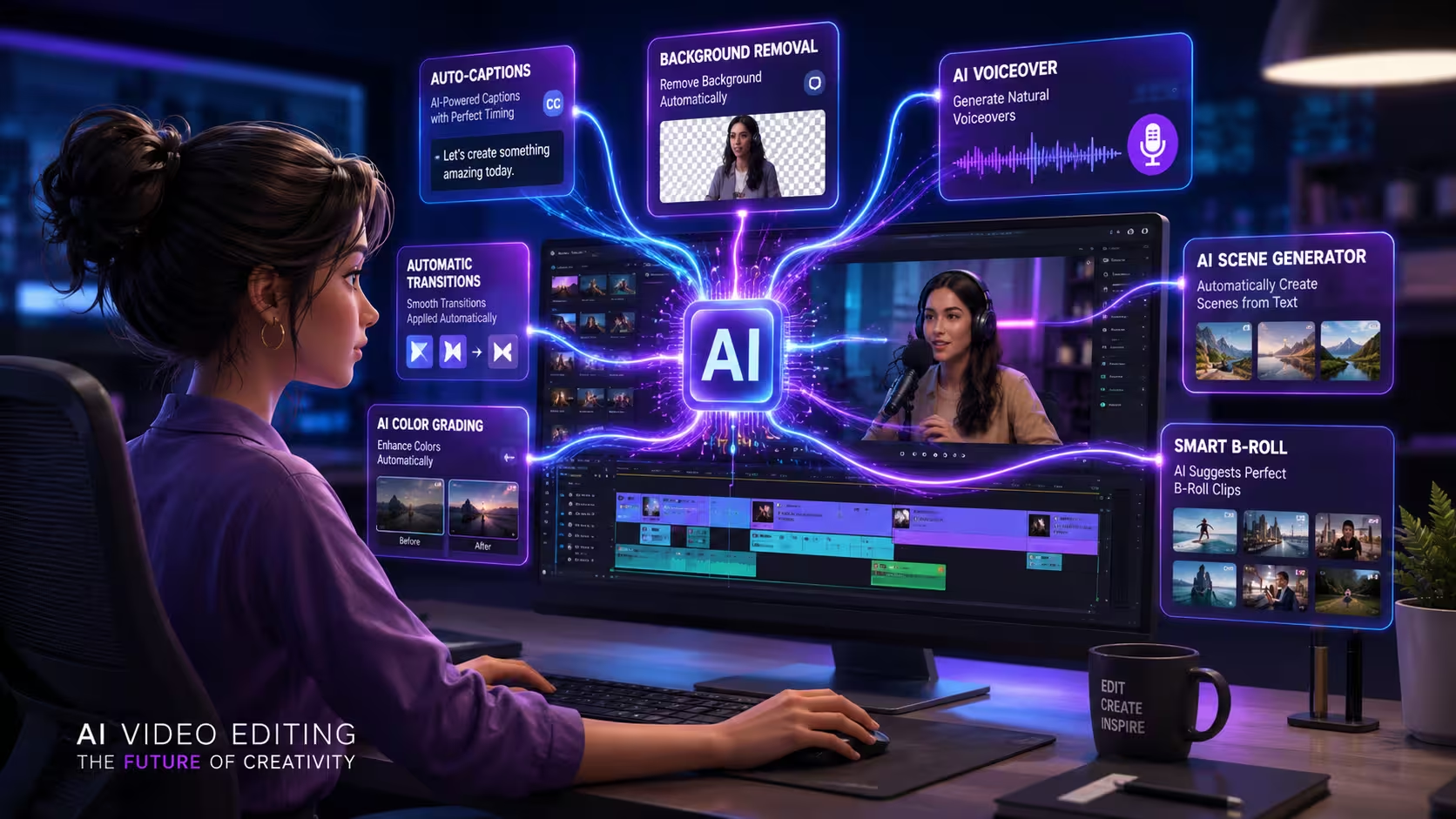
Video creation has officially transformed. Just a few years ago, producing a polished, high-quality video required expensive desktop software, a high-end graphics card, and hours spent manually slicing footage, syncing audio, and designing visual effects. Today, artificial intelligence has completely disrupted this workflow, making professional-grade video editing accessible to anyone with a browser and an internet connection.
Whether you are a YouTube creator, a social media manager, a small business owner, or a digital marketer, adopting the right ai tools for video editing free of cost can dramatically cut down your post-production time while improving overall content quality. The market is currently flooded with automated generators, auto-captioning tools, and prompt-based video editors. However, finding genuine ai tools for video editing free without restrictive paywalls or heavy watermarks can be challenging.
In this ultimate 2026 guide, we explore how artificial intelligence is changing video workflows, what key features you should look for, and a comprehensive breakdown of the top 7 ai tools for video editing free that you can start using today.
1. How Artificial Intelligence is Revolutionizing Video Content Creation
The shift from timeline-based manual editing to AI-driven automation represents one of the biggest leaps in digital media production. Modern editors are no longer just passive software interfaces; they act as co-creators that understand context, tone, and visual structure.
Traditional Manual Editing vs. AI-Powered Workflows
Traditional video editing involves repetitive, manual labor: reviewing raw footage, cutting out dead air, correcting colors clip by clip, and hand-crafting subtitles. An editor might spend 4 to 6 hours polishing a simple 10-minute video.
By leveraging ai tools for video editing free, creators can automate these low-level tasks:
-
Automated Script-to-Video: Transforming written prompts or blog posts into fully assembled video rough-cuts instantly.
-
Smart Silence & Filler Removal: Automatically detecting and cutting pauses, “ums,” and “ahs” from spoken audio.
-
Real-time Auto-Captioning: Generating stylish, animated captions with high accuracy across multiple languages.
-
Generative VFX and Inpainting: Removing unwanted background elements or generating missing visuals with simple text prompts.
Cost Savings for Independent Creators
For solo creators and small teams, budget constraints often limit scale. Investing in premium enterprise software licenses and subscription plans can be a significant financial burden. Using reliable ai tools for video editing free allows emerging creators to produce broadcast-quality content without initial capital expenditure. By combining free tiers of specialized web apps, creators can handle everything from voiceovers to dynamic reframing without paying a dime.
2. Key Features to Look For in Free AI Video Editing Software
Not all free plans are created equal. Many platforms advertise as ai tools for video editing free, only to place heavy watermarks over your final export or limit export resolutions to unusable low quality. When evaluating ai tools for video editing free, keep these key parameters in mind:
Watermark Restrictions
A watermark can ruin an otherwise professional video. Some tools leave subtle branding in the corner, while others place massive watermarks across the center of the frame. Prioritize platforms that offer watermark-free exports on their free plan, or those whose watermarks can be cleanly cropped out without altering aspect ratios.
Export Resolution & Rendering Speed
High-definition video (at least 1080p FHD) is essential for YouTube, TikTok, and Instagram today. Check whether the free tier limits exports to 720p or caps your monthly rendering minutes. Fast cloud rendering is another crucial factor, as heavy AI models require robust server processing.
Essential AI Capabilities
Depending on your content strategy, look for software that excels in your specific workflow needs:
-
Text-based editing: Allows you to edit video by editing a written transcript.
-
Auto-reframing: Automatically converts landscape 16:9 videos into vertical 9:16 Shorts/Reels while keeping the subject centered.
-
AI Voiceovers & Speech Enhancement: Cleans up background noise or synthesizes realistic human text-to-speech.
3. Detailed Review of the Best Free AI Video Editors in 2026
Here is an in-depth breakdown of the top 7 ai tools for video editing free that offer incredible functionality, generous free tiers, and cutting-edge features.
1. CapCut (Desktop & Web) – Best Overall for Social Media Creators
CapCut has established itself as an absolute powerhouse among ai tools for video editing free across mobile, web, and desktop environments. Owned by ByteDance, CapCut provides a suite of advanced features that rivals expensive pro desktop suites.
Key AI Features
-
Auto-Captions & Subtitles: Generates high-accuracy subtitles in over 20 languages with auto-highlighting kinetic typography styles.
-
Script-to-Video Generator: Input a raw text concept or AI-generated script, and CapCut automatically pulls stock footage, matches audio, and applies background music.
-
AI Background Removal: Removes video backgrounds in real-time without requiring a physical green screen setup.
-
Smart Motion Tracking: Tracks objects or faces and attaches text or graphics seamlessly.
Pros
-
Zero watermarks on standard exports.
-
Full 1080p and 4K export support on the free tier.
-
Massive library of free royalty-free music, effects, and transitions.
Cons
-
Cloud storage limits on the free plan require local file management.
-
Advanced pro effects occasionally require paid unlocks.
2. RunwayML – Best for Generative AI & Advanced VFX
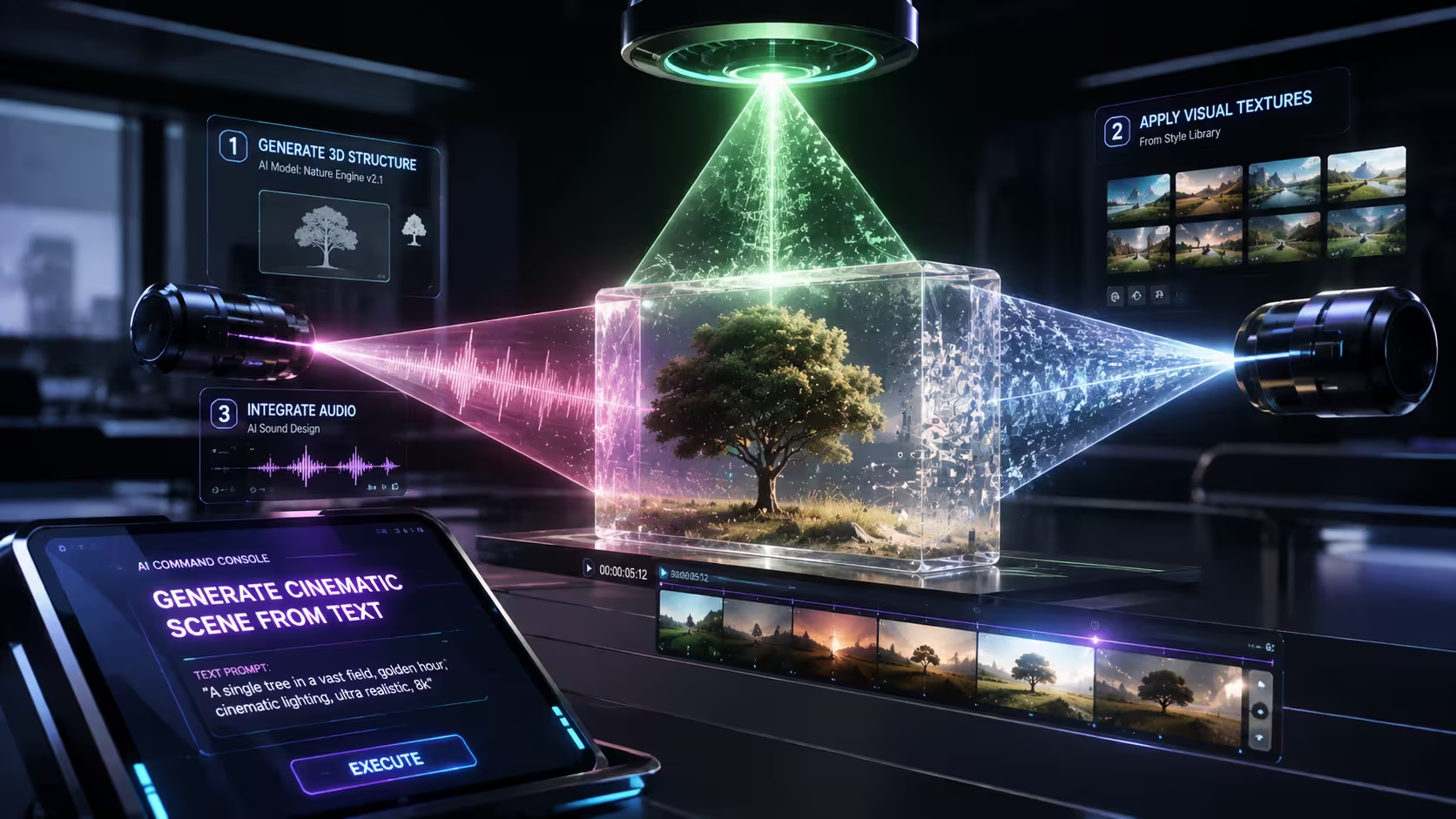
RunwayML (Runway) remains at the absolute cutting edge of generative creative tech. If you are looking for ai tools for video editing free that offer sci-fi level generative video capabilities, Runway is the premier choice.
Key AI Features
-
Gen-2 & Gen-3 Text-to-Video: Generate realistic or stylized video clips purely from text prompts or reference images.
-
Motion Brush: Paint specific areas of a static image to induce realistic directional movement.
-
Inpainting: Highlight any unwanted object or person in raw video footage and remove them instantly with generative background fill.
-
Green Screen AI: One-click background masking for complex hair and fast-moving subjects.
Pros
-
Unmatched generative AI power and artistic control.
-
Completely web-based—no heavy GPU download needed.
-
Free tier includes non-expiring cloud credits to test advanced models.
Cons
-
Generative clips can be short (typically 4–10 seconds per generation).
-
Free exports include a small discrete watermark.
3. InVideo AI – Best for Prompt-Based Full Video Creation
InVideo AI acts like a full video production studio inside a single chat prompt box. It stands out among ai tools for video editing free by generating full, publish ready videos complete with scripts, media, dynamic subtitles, and human voiceovers from simple sentences. If you want to skip manual editing and generate complete scenes automatically, you can also explore dedicated free AI video generator tools to speed up your content creation.
Key AI Features
-
Text Prompt-to-Video Engine: Simply type: “Create a 60-second YouTube Short about space exploration for kids” and it builds the entire project.
-
Text-Based Video Editing: Type commands into the prompt box like “Delete scene 3” or “Change voiceover to a British accent” to modify the video dynamically.
-
AI Script Generator: Integrates with LLMs to draft engaging, hook-driven scripts automatically.
Pros
-
Extremely fast asset assembly for faceless YouTube or TikTok channels.
-
Voice Synthesis sounds natural and human-like.
-
Simple workflow for absolute beginners with zero editing experience.
Cons
-
Free tier exports include InVideo watermarks.
-
Free tier relies on stock media assets, which can sometimes feel generic.
4. Descript – Best for Text-Based Video & Audio Editing
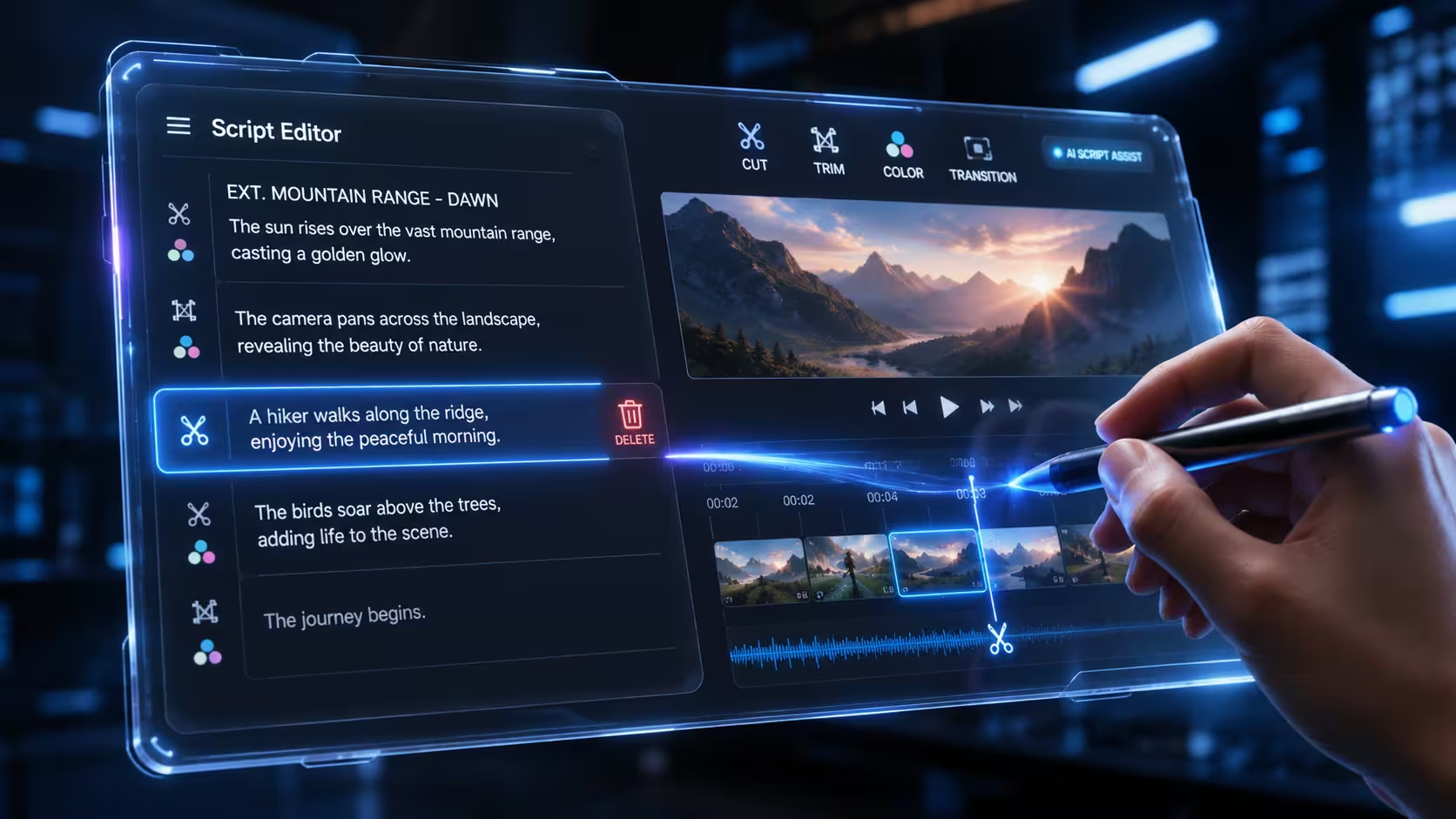
Descript completely reinvents the timeline model. It automatically transcribes your video, allowing you to edit the video file by simply editing the text document much like editing a Google Doc.
Key AI Features
-
Text-Based Video Editing: Cut video clips, trim sentences, or reorder scenes by cutting and pasting text from the transcript.
-
Studio Sound: One-click AI audio processing that eliminates echoes, background hiss, and room noise to make cheap mic recordings sound professional.
-
Overdub Voice Cloning: Synthesize a digital twin of your voice to add missing words to your video without re-recording.
-
Eye Contact Correction: Uses AI to adjust your gaze, making it look like you are looking directly into the camera lens even if you were reading a script.
Pros
-
Ideal for podcasts, tutorials, webinars, and interview setups.
-
Incredible time savings for transcription and rough cutting.
-
Clean, non-cluttered interface focused on content clarity.
Cons
-
Free plan limits transcription minutes per month.
-
Requires a slight learning curve to transition from traditional timeline workflows.
5. Clipchamp by Microsoft – Best Web-Based Native Editor
As Microsoft’s official web-based editor, Clipchamp offers a stable, reliable environment for everyday content creators seeking ai tools for video editing free without hidden paywalls.
Key AI Features
-
Auto-Compose AI: Upload your raw photos and video clips, select a theme, and let AI automatically compile a synchronized highlight reel.
-
Text-to-Speech Engine: Wide library of realistic AI voice generators with adjustable pitch, emotion, and pacing.
-
Silence Removal: Detects unnatural pauses in vocal tracks and offers instant auto-trimming options.
Pros
-
Free 1080p exports with no watermarks.
-
Deep integration with Windows 11 and OneDrive.
-
Very stable cloud-based rendering for mid-range PCs.
Cons
-
Advanced generative video features are limited compared to RunwayML or InVideo.
-
Limited suite of complex motion graphics compared to CapCut.
6. Wondershare Filmora AI – Best Desktop Editor for Beginners
Wondershare Filmora has long been a favorite for beginners, and its recent updates have integrated powerful generative and utility AI features directly into its desktop interface.
Key AI Features
-
AI Smart Cutout: Precision brush tool to separate subjects from backgrounds in complex scenes.
-
AI Audio Stretch: Automatically stretches or crops any music track to fit your video duration without distorting audio pitch or tempo.
-
AI Copilot Editing: An AI assistant inside the software that answers editing questions and suggests visual effects in real-time.
Pros
-
User-friendly timeline interface ideal for beginners transitioning to desktop editing.
-
Excellent library of built-in templates, motion graphics, and sound effects.
-
Stable performance on moderate hardware setups.
Cons
-
The free trial places a large watermark across exported files.
-
Higher hardware system requirements compared to web apps.
7. Opus Clip – Best for Converting Long-Form Content into Short-Form Content
For creators who produce podcasts, long-form YouTube tutorials, or live streams, Opus Clip is one of the most effective ai tools for video editing free designed specifically for repurposing content.
Key AI Features
-
AI Virality Score: Analyzes long videos and highlights clips with the highest viral potential based on hooks and trend data.
-
Auto-Framing: Tracks active speakers and keeps them perfectly centered in 9:16 vertical video formats.
-
Dynamic Animated Captions: Automatically generates trending kinetic captions with emoji insertion and key-phrase highlighting.
Pros
-
Saves hours of manual trimming for YouTube Shorts, TikTok, and Instagram Reels.
-
Exceptional accuracy in speech detection and dynamic layout assembly.
-
Generous monthly free credit allocation for new creators.
Cons
-
Specialized only in short-form conversion, not built for full custom editing from scratch.
-
Free tier retains small branding overlay.
Side-by-Side Feature Comparison Table
To help you choose among these ai tools for video editing free, here is a direct comparison of their main features, export capabilities, and best use cases:
| Tool Name | Primary Use Case | Free Plan Watermark? | Max Free Resolution | Standout AI Feature |
| CapCut | All-in-One Social Video | ❌ No | 1080p / 4K | Auto-Captions & Script-to-Video |
| RunwayML | Generative Visuals & VFX | ⚠️ Yes (Small) | 720p | Gen-2 Text-to-Video & Inpainting |
| InVideo AI | Prompt-based Full Video Creation | ⚠️ Yes | 720p / 1080p | Full Script & Video Prompting |
| Descript | Podcast & Text-Based Editing | ❌ No (Limited mins) | 720p / 1080p | Transcript Editing & Studio Sound |
| Clipchamp | Fast Desktop & Web Edits | ❌ No | 1080p | Auto-Compose & AI Text-to-Speech |
| Filmora AI | Desktop Timeline Editing | ⚠️ Yes | 1080p | AI Smart Cutout & Copilot Assistant |
| Opus Clip | Long-to-Short Content Repurposing | ⚠️ Yes (Small) | 1080p | AI Virality Hook Detection & Reframing |
4. How to Edit Videos with AI for Free: A Complete Walkthrough
Now that you are familiar with the best software available across desktop and web platforms, it is time to examine a practical, end-to-end production workflow. Even if you have zero prior technical expertise or traditional timeline editing experience, leveraging modern ai tools for video editing free of charge allows you to convert a simple text concept into a polished, publish-ready video in less than half an hour.
Below is a detailed 5-step strategy designed to streamline your content pipeline using ai tools for video editing free to achieve maximum efficiency without compromising on visual quality.
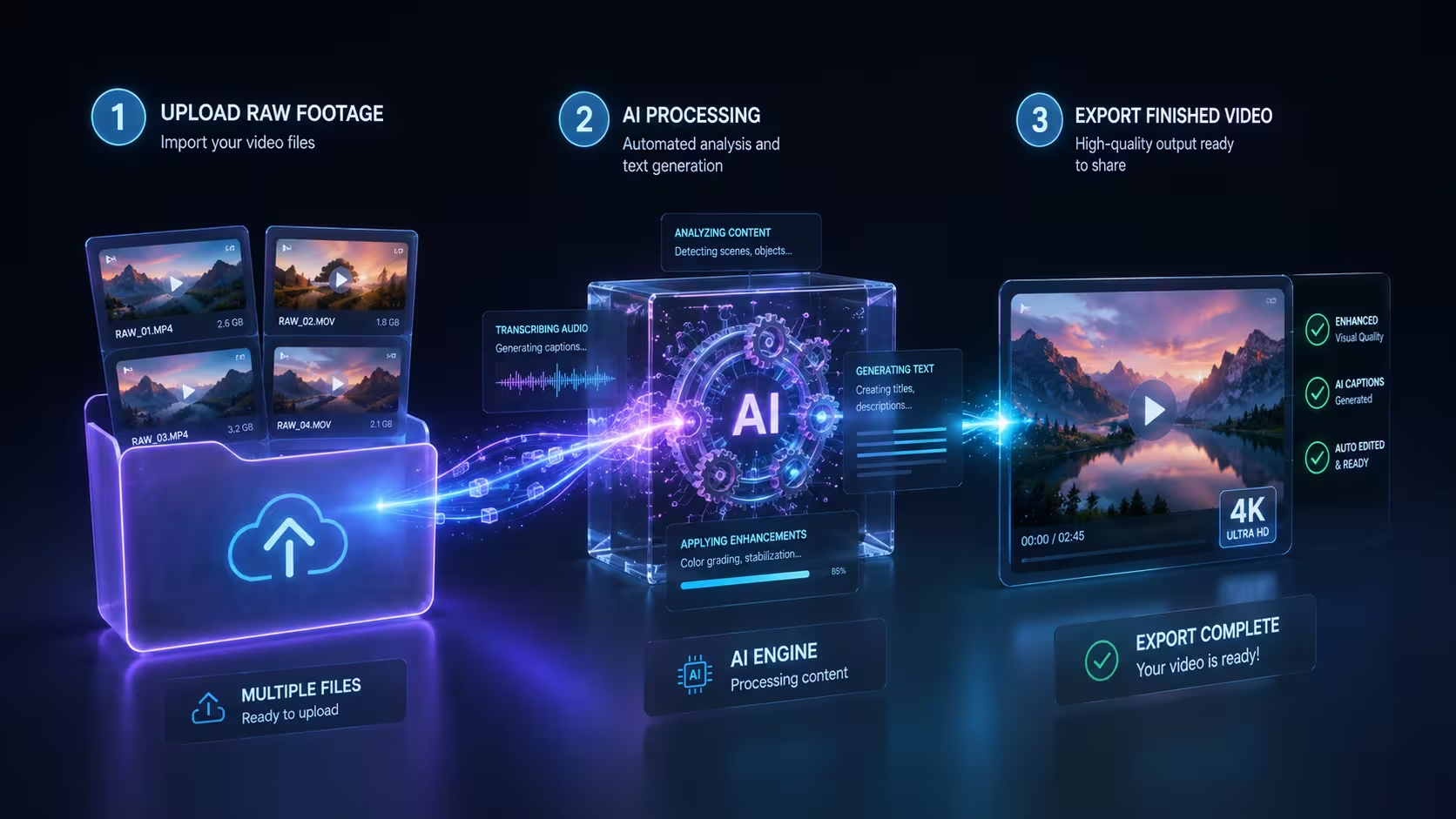
Step 1: Generate Your Script and Visual Outline
Every successful video starts with a compelling, well-structured story script. Before launching your timeline, you need a clear narrative direction. You can write your script manually, or you can accelerate the process by using large language models alongside dedicated script-building platforms.
When drafting your narrative, outline exact structural beats: an attention-grabbing hook in the first 5 seconds, key informational chapters in the middle body, and a strong call-to-action (CTA) at the end. Many creator-focused ai tools for video editing free come equipped with built-in prompt assistants. These assistants automatically add scene descriptions, tone markers, and visual cues (such as “insert talking-head close-up” or “overlay B-roll of modern technology”) directly into your text document. Having a structured script makes automated assembly significantly faster during the assembly phase.
Step 2: Auto-Assembling Media and B-Roll Assets
Once your script is locked, upload your primary raw footage (commonly referred to as A-roll) into your selected workspace. If you are producing faceless YouTube content or social media Shorts, you do not even need to record raw footage yourself.
Instead, paste your text prompt into full-production ai tools for video editing free like InVideo AI or CapCut’s script-to-video studio. The natural language processing engines analyze individual sentences, scan major keywords, and automatically source matching high-definition stock videos, graphics, and background music tracks. The system places these assets chronologically on your timeline, saving you hours of searching through stock repositories manually. You can then swap out any individual clip with a single click if it does not match your precise vision.
Step 3: Generating Dynamic AI Captions and Subtitles
Data shows that over 80% of audiences view social media videos on mute while commuting or working. Because of this behavioral shift, dynamic, styled captions are no longer optional they are an absolute necessity for holding viewer retention.
Instead of typing subtitles line by line, utilize the auto-captioning engines present in modern ai tools for video editing free. Navigate to your editor’s caption tab, select your target primary language, and click the auto-transcribe function. The voice-to-text model processes speech frequencies, generating styled kinetic captions synchronized perfectly with speech audio. You can apply trending preset animations, select custom font styles, highlight key keywords in bright accent colors, and insert automated emojis. Take two minutes to skim the generated text transcript to fix minor spelling errors, technical terms, or specific brand names.
Step 4: Enhancing Vocal Clarity and Removing Dead Air
Clean, professional audio quality keeps viewers engaged longer than high-resolution camera gear. Low-quality audio filled with background hiss, room reverberation, or distracting air conditioning hums instantly makes a video feel amateurish.
Fortunately, dedicated ai tools for video editing free include sophisticated voice isolate algorithms designed to clean up vocal tracks instantly:
-
Studio Sound Processing: Activate AI noise reduction features inside software like Descript or CapCut to strip away background ambient hums, room echoes, and microphone static, elevating basic smartphone recordings to studio microphone standards.
-
Automated Silence Removal: Hesitation pauses, long breathes, and verbal filler words (such as “um,” “uh,” or “you know”) ruin the momentum of your pacing. Run an automated silence removal tool to detect dead air and cut unnecessary pauses instantly. This turns a slow 10-minute presentation into a fast-paced, engaging 7-minute cut without awkward jump-cut editing.
Step 5: Final Timeline Optimization and High-Resolution Exporting
Before exporting your project, play back the full video timeline to make sure transitions flow smoothly. Check that dynamic subtitle lines do not block essential graphic elements, lower-third titles, or subject faces on vertical 9:16 aspect ratios.
When you are satisfied with the final cut, proceed to the export dashboard. Choose standard high-definition output options ideally 1080p Full HD or 4K resolution and select the MP4 container format encoded with the H.264 codec for maximum playback compatibility across social platforms. Selecting modern ai tools for video editing free that allow clean 1080p exports without watermarks ensures your channel maintains a professional visual aesthetic.
5. Limitations of Free AI Video Tools and Future Outlook
While neural-network-powered editing software has advanced at a rapid pace, understanding the current limitations and future trajectory of ai tools for video editing free will help you manage expectations and avoid production bottlenecks.
Understanding the Reality of Free Tier Constraints
Building and operating generative machine learning models requires massive server GPU compute power. Because cloud processing is expensive to maintain, developers offering ai tools for video editing free must balance accessibility with business sustainability through freemium structures. Knowing these common boundaries helps you navigate around them effectively:
1. Credit-Based Usage Limits
Platforms that focus heavily on generative video (such as RunwayML or InVideo AI) operate on monthly credit systems. Actions like generating a 5-second text-to-video clip or rendering an AI voiceover consume credit points. Once your monthly free allocation runs out, you must wait for the next billing cycle reset or upgrade to paid tiers.
2. Server Rendering Priority
When exporting videos on unpaid plans, your rendering job is placed in a shared processing queue. During high-traffic hours, cloud rendering times can slow down compared to paid subscribers who receive priority server speeds.
3. Watermarking and Resolution Locks
Certain specialized software solutions lock premium exports behind paywalls. While platforms like CapCut and Clipchamp offer watermark-free exports, other desktop applications (like Filmora) apply large watermarks across free outputs unless upgraded. Always verify watermark policies before investing time in complex projects.
The Human-AI Collaboration Model: Why Editors Still Matter
Despite rapid technological leaps, artificial intelligence is an assistant, not a total replacement for human creativity. AI excels at repetitive technical tasks such as cutting silences, generating accurate transcripts, matching B-roll footage, and re-framing aspect ratios. However, software lacks emotional intelligence, contextual comedic timing, and genuine narrative judgment.
An algorithm might detect a peak sound level in an interview, but it does not understand why holding a specific emotional pause builds tension before a punchline. The most successful content creators combine automated ai tools for video editing free to handle time consuming administrative work while keeping human creative control over storytelling pacing, brand voice, and final artistic style.
What Lies Ahead for AI Video Workflows Beyond 2026
The landscape of automated content creation continues to evolve. As generative architectures become faster, lighter, and more accurate, creators can look forward to several ground-breaking technological upgrades in coming years:
-
Multimodal Natural Language Editors: Instead of trimming timelines manually or clicking complex menus, creators will edit projects entirely through conversational voice interfaces (e.g., “Make the lighting warmer in scene two and change background music to an upbeat lo-fi track”).
-
Instant Real-Time Lip-Sync Translation: Software will translate video voiceovers into dozens of global languages while using generative AI to modify the speaker’s actual lip movements frame-by-frame, removing language barriers entirely.
-
Hyper-Personalized B-Roll Generation: Instead of relying on static stock video libraries, creators will generate custom, 3D animated scene cutaways on demand, perfectly matching unique local contexts in real time.
Frequently Asked Questions (FAQs)
Q1: What is the single best overall free AI video editor without a watermark?
CapCut remains the overall top recommendation among ai tools for video editing free because both its desktop application and web platform allow full 1080p and 4K video exports without imposing watermarks on standard edits. Microsoft Clipchamp is another excellent web-native alternative that delivers clean, unbranded exports completely free of charge.
Q2: Are videos produced using free AI video tools safe for commercial usage?
In most standard cases, yes. However, you must carefully read the specific licensing terms of the platform you choose. Tools like CapCut, Clipchamp, and Descript permit full commercial usage on free accounts. Conversely, certain specialized generative video platforms restrict commercial rights for assets generated during unpaid free trial modes.
Q3: How do AI video tools convert horizontal landscape videos into vertical Shorts?
Modern platforms utilize intelligent computer vision tracking algorithms. The AI scans your 16:9 horizontal frame, identifies the active human speaker or primary subject, and dynamically crops the video into a 9:16 vertical format while keeping the focal point centered across every single frame automatically.
Q4: Can I build a successful faceless YouTube channel using only free AI tools?
Yes. Thousands of creators build profitable faceless channels by combining multiple ai tools for video editing free of cost. You can draft scripts with conversational AI, generate voiceover audio using text-to-speech tools, assemble stock footage using prompt-based editors, and apply stylized dynamic subtitles automatically without buying expensive camera gear or hiring external teams.
Final Verdict: Which Free AI Video Tool Should You Choose?
Selecting the ideal application depends entirely on your specific content goals and existing setup:
-
Choose CapCut or Microsoft Clipchamp if you need an all-round, watermark-free video editor for YouTube uploads, Instagram Reels, and TikTok content.
-
Choose InVideo AI if you want to assemble complete, prompt-driven faceless social media videos from simple text ideas.
-
Choose Descript if you produce podcaster interviews, video essays, or tutorial courses that benefit from document-style text transcription editing.
-
Choose Opus Clip if you already have long-form podcasts or webinars and want to extract short viral clips for social media automatically.
-
Choose RunwayML if you want to experiment with cutting-edge generative video visual effects and custom text-to-image animations.
By strategically incorporating these flexible ai tools for video editing free into your publishing routine, you can eliminate editing delays, upload high-quality videos consistently, and build a growing online audience without spending a single dollar on software subscriptions.